
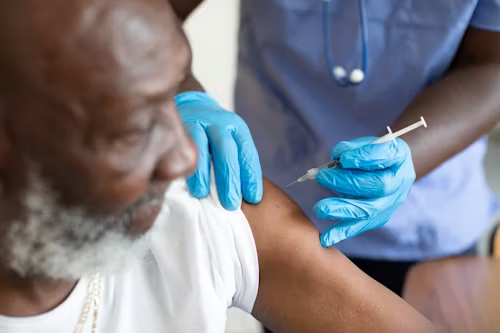
State-by-State Care Availability has become an important subject in healthcare discussions as families, patients, and healthcare professionals continue evaluating how medical and homecare services differ across regions. Access to healthcare can vary depending on population size, infrastructure, hospital networks, and the number of trained caregivers available within each state.
Across many countries, including regions such as Nigeria, healthcare accessibility often differs significantly between urban centers and rural communities. Some states provide advanced medical facilities and homecare programs, while others face shortages of trained personnel and healthcare resources.
Because of these variations, understanding State-by-State Care Availability helps individuals plan medical support, locate caregivers, and identify where certain healthcare services are most accessible.
Healthcare analysts frequently examine these differences to determine how policies and investments affect medical care distribution.
Quick Summary
State-by-State Care Availability explained
The concept of State-by-State Care Availability refers to how healthcare services, homecare providers, hospitals, and medical resources are distributed across different states or regions.
Government health departments and healthcare organizations typically monitor these differences to ensure equitable healthcare access.
Healthcare authorities monitoring service coverage
Health authorities, hospitals, and organizations such as World Health Organization often study healthcare availability across regions. Their goal is to understand where services are concentrated and where improvements may be required.
Background
Why State-by-State Care Availability matters
Understanding State-by-State Care Availability is essential for healthcare planning. Patients seeking treatment, especially those requiring long-term care or home support, often need to know whether services are available within their location.
Medical resources are not evenly distributed.
Urban states with larger populations usually attract more hospitals, specialists, and private healthcare providers.
Meanwhile, rural regions may experience shortages of healthcare professionals and infrastructure.
These differences influence patient outcomes and access to timely treatment.
When families need homecare services for elderly relatives or recovering patients, knowing which states offer reliable caregivers becomes extremely important.
Healthcare infrastructure differences
Healthcare infrastructure can vary widely between states.
Some states have modern hospitals, specialized clinics, and trained nurses providing advanced medical services.
Others may rely heavily on smaller community health centers.
In places like Lagos, healthcare providers often operate multiple hospitals and homecare agencies.
However, smaller regions may have fewer healthcare institutions available.
Population density also affects healthcare demand.
More people typically means greater demand for doctors, nurses, and caregivers.
Details
State-by-State Care Availability across healthcare sectors
Examining State-by-State Care Availability requires evaluating several healthcare sectors.
These sectors include hospitals, homecare providers, rehabilitation centers, and community healthcare programs.
Hospital availability by state
Some states host large teaching hospitals and medical research centers.
These facilities provide specialized treatment options such as surgery, intensive care, and advanced diagnostics.
In Nigeria, for example, institutions like Lagos University Teaching Hospital play a significant role in delivering specialized healthcare services.
States with such hospitals tend to attract more patients seeking complex treatments.
Smaller states may rely on regional hospitals for advanced procedures.
Homecare services availability
Homecare support is another factor affecting State-by-State Care Availability.
These services involve trained caregivers visiting patients in their homes to provide assistance with daily activities or medical monitoring.
Homecare providers typically offer services such as:
- Personal care assistance
- Medication management
- Physiotherapy support
- Elderly companionship
- Post-surgery recovery care
States with larger healthcare markets often host numerous homecare agencies.
Conversely, regions with fewer healthcare providers may have limited options for families seeking professional caregivers.
Caregiver workforce distribution
Another element shaping State-by-State Care Availability is the number of trained healthcare workers in each region.
Medical professionals frequently relocate to areas offering better career opportunities and higher salaries.
Consequently, urban centers often have higher concentrations of doctors and nurses.
Training institutions also influence workforce distribution.
States with universities and medical schools tend to produce more healthcare professionals.
Analysis
Impact of State-by-State Care Availability on patients
The differences in State-by-State Care Availability can directly influence patient outcomes.
When healthcare services are easily accessible, patients can receive early diagnosis and timely treatment.
In contrast, regions lacking adequate medical infrastructure may experience delayed healthcare delivery.
These delays sometimes lead to worsening health conditions.
Therefore, healthcare planners continuously evaluate service distribution across states.
Benefits of balanced healthcare distribution
Improving State-by-State Care Availability can produce several benefits.
Patients gain easier access to treatment facilities.
Hospitals experience reduced overcrowding.
Medical professionals also find opportunities to serve broader communities.
Governments often invest in healthcare programs designed to reduce regional disparities.
Infrastructure development and training initiatives can help expand medical services in underserved areas.
What Next
Future improvements in State-by-State Care Availability
Efforts to improve State-by-State Care Availability are ongoing.
Healthcare authorities frequently develop programs aimed at strengthening medical services in regions with limited resources.
These initiatives may include:
- Building new hospitals
- Expanding community health programs
- Training additional healthcare workers
- Supporting telemedicine services
Technology is also playing an increasing role.
Telehealth platforms allow doctors to consult with patients remotely, helping bridge gaps in healthcare access.
Possible healthcare policy developments
Governments and healthcare organizations may introduce new policies aimed at improving medical service distribution.
Investment in healthcare infrastructure is likely to remain a priority.
Expanding homecare services is another potential development.
As populations age, demand for in-home medical support continues to grow.
Improving caregiver training programs could significantly strengthen regional healthcare systems.
State-by-State Care Availability remains a critical factor in determining how individuals access healthcare services. Differences in hospital networks, caregiver availability, and medical infrastructure influence the quality of care patients receive across various regions.
Understanding these variations helps families make informed healthcare decisions while encouraging policymakers to improve service distribution.
Healthcare professionals and organizations continue exploring ways to expand medical access and ensure that patients in every state receive appropriate support.